
 By
By 
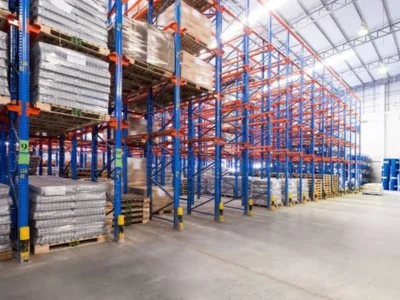
The mobile racking storage system represents one of those innovations that, once you understand it, seems almost obvious, yet its implications for warehouse efficiency are profound. In an era when urban land prices continue their relentless upward trajectory and warehouse operators face mounting pressure to extract maximum value from every square metre, this technology offers a solution that is both elegantly simple and remarkably effective. The basic premise involves mounting standard pallet racking onto wheeled carriages that glide along rails embedded in the floor, eliminating the need for permanent aisles between every rack.
Understanding the Fundamental Mechanism
At first glance, a warehouse equipped with mobile racking appears to defy conventional storage logic. Where traditional facilities dedicate roughly 40% of floor space to aisles, mobile systems compress multiple racking units together, creating access aisles only when needed. The racks themselves sit atop wheeled bases, either manual or motorised, that traverse tracks installed flush with the warehouse floor.
When an operator requires access to a particular storage location, they simply activate the system to create an aisle at that specific position. The surrounding racks shift along their tracks, temporarily consolidating elsewhere. Once the retrieval or storage task completes, the racks can close again, returning to their compressed configuration. This dynamic use of space fundamentally challenges the assumption that accessibility requires permanent circulation paths.
The Space Utilisation Revelation
The numbers tell a striking story. A conventional warehouse with selective racking might achieve 45% to 50% storage density, with the remainder consumed by necessary aisles. A well-designed mobile storage racking system can push this figure to 80% or higher, nearly doubling the effective storage capacity within the same building footprint.
Consider what this means in practical terms:
- A 1,000 square metre facility could potentially house 160% of the inventory stored in traditional racking
- Climate-controlled environments see proportionally reduced energy costs per stored unit
- Building construction costs per pallet position decrease significantly
- Urban warehouses can compete more effectively with suburban alternatives
In Singapore, where industrial land commands premium prices and zoning regulations impose strict height limitations in certain areas, these advantages carry particular weight. A warehouse manager in one of the island nation’s industrial estates notes, “We were facing the choice between relocating to a larger facility or implementing mobile racking. The cost comparison was stark. The mobile system paid for itself in avoided relocation expenses within three years.”
Operational Considerations and Trade-offs
Yet the mobile racking storage approach does not suit every application. The system introduces a temporal element to storage access. Unlike selective racking where any pallet remains immediately accessible, mobile systems require the few seconds or minutes needed to create an access aisle. For high-velocity operations where dozens of picks occur hourly, this delay can bottleneck productivity.
The initial investment also deserves careful consideration. Mobile systems typically cost two to three times more than conventional static racking, owing to the mechanical components, track installation, and often electrical controls. The floor itself must meet exacting flatness specifications, as even minor irregularities can impede smooth carriage movement or cause premature wear on wheels and bearings.
Key limitations include:
- Reduced picking speed compared to selective racking
- Higher upfront capital requirements
- More complex maintenance needs
- Floor loading concentrations requiring structural analysis
- Power requirements for motorised systems
Ideal Applications and Environments
Certain warehouse operations align naturally with mobile racking infrastructure. Archives and document storage facilities, where retrieval frequency matters less than storage density, represent perhaps the perfect use case. Medical records, legal files, and historical documents can remain secure and organised whilst occupying minimal space.
Cold storage applications also benefit substantially. When storing frozen goods or pharmaceuticals requiring strict temperature control, reducing the refrigerated volume by 30% to 40% through increased density generates ongoing operational savings. The initial investment in mobile racking becomes increasingly justified as energy costs rise.
“Our pharmaceutical cold storage facility in Singapore achieved a 35% increase in storage capacity without expanding the building envelope,” explains one facility operator. “The reduced refrigerated volume lowered our energy consumption by nearly 25%. In our cost structure, that represents a significant competitive advantage.”
Parts warehousing for industries with slow-moving inventory also suits mobile systems well. Automotive manufacturers maintaining spare parts libraries, aerospace component storage, and industrial equipment suppliers often deal with thousands of SKUs accessed infrequently. The ability to store more within existing facilities outweighs the modest reduction in access speed.
Installation and Safety Requirements
Implementing a mobile pallet racking solution demands careful engineering and planning. The floor must support not only the weight of loaded racking but the concentrated loads as carriages move and weight temporarily consolidates. Structural engineers analyse the building’s capacity, sometimes requiring floor reinforcement.
Safety features have evolved considerably. Modern systems incorporate:
- Anti-tip mechanisms preventing rack overturning during movement
- Obstruction detection systems that halt movement if workers or objects block the path
- Emergency stop controls accessible at multiple points
- Warning lights and audible signals during operation
- Interlocks preventing simultaneous opening of multiple aisles in unstable configurations
The future of warehouse storage increasingly points toward solutions that challenge traditional spatial assumptions. As land costs rise and sustainability concerns mount, technologies that maximise existing infrastructure gain importance. The mobile racking storage system exemplifies this shift, offering warehouse operators a proven method to adapt to contemporary economic and environmental pressures.





Comments