
 By
By 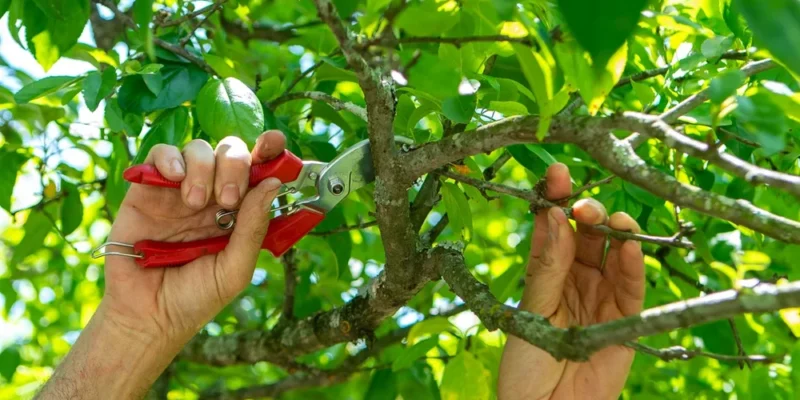
The tembusu tree standing at the entrance of a well-maintained Singapore bungalow tells you something about the property owner before you step through the gate. Its canopy is balanced, its lower branches cleared to a consistent height, its crown dense but not so heavy that the structure looks precarious. That appearance does not happen by itself. It is the result of tree pruning applied over years, at the right times, by someone who understands what the tree is trying to do and how to guide it.
In Singapore, trees grow fast. More precisely, they grow constantly. There is no winter dieback, no leaf fall that reveals the structure and invites a period of reflective inaction. A branch you ignored in January has become a problem by March. A young tree left unpruned for three years has developed branching patterns that will cost more to correct than they would have cost to prevent. Tree pruning in Singapore is not seasonal maintenance. It is an ongoing relationship between the property owner and the tree.
How Pruning Improves Growth
The relationship between pruning and tree growth is more complex than simply removing material. When apical dominance is maintained by preserving a single leader and removing competing branches early, the tree directs its growth energy upward and outward in a balanced pattern. When apical dominance is lost through neglect or damage, multiple stems compete for dominance and the tree develops a structure prone to splitting.
Pruning also improves growth indirectly through canopy thinning. A dense canopy that allows little light to penetrate creates shade stress on interior branches, which then die and become deadwood. Regular thinning keeps the interior of the canopy productive, distributes growth evenly across the crown, and reduces the accumulation of deadwood that makes older trees hazardous.
Root growth benefits from above-ground pruning as well. A reduction in canopy mass reduces the demand on the root system, allowing roots to consolidate rather than expand indefinitely to support an ever-growing top. In Singapore’s urban environments where root space is constrained, this balance between canopy and root is an important consideration in long-term tree management.
The Appearance Dimension
Appearance matters for trees in landscape settings. A tree that is correctly pruned for its species and growth habit looks right in a way that is difficult to articulate but immediately apparent. The branch spacing feels proportional. The canopy silhouette matches the character of the species. The clearance beneath the crown is consistent.
Tree pruning for appearance begins with understanding the natural form of the species. Frangipani develops a characteristically open, spreading structure that should be preserved rather than cut into a ball. Rain trees develop a broad umbrella canopy that requires lifting rather than reduction. Tembusu trees develop a distinctive irregular crown that should be thinned but not uniformly clipped.
Pruning that works against the natural form of the species produces results that look artificial and damage the tree’s structural integrity. Qualified arborists work with the tree’s growth tendency, guiding it rather than imposing a shape upon it.
Species-Specific Considerations in Singapore
Singapore’s landscape features dozens of tree species in residential and commercial settings, each with its own pruning requirements. Angsana trees, widely planted along roadsides, develop brittle timber that benefits from early structural pruning to reduce the risk of branch failure. Tembusu trees produce very slow growth that means each pruning decision has long-lasting consequences.
Fruit trees in private gardens require production-focused pruning to maintain yields. Mango trees are pruned after fruiting to encourage the new growth cycle that will produce the following year’s blossom. Banana plants, not technically trees but common in Singapore gardens, require the removal of spent stems after fruiting to support new suckering growth.
Ornamental palms, including the Royal Palm and the Manila Palm, require regular removal of dead fronds that create weight at height and, for certain species, management of developing fruit stalks that can reach considerable mass.
Engaging a Qualified Provider
Crown reduction and tree trimming from a qualified provider starts with an assessment of the tree’s current condition, its species-specific growth habit, and the objectives of the pruning programme. The arborist will identify structural issues, specify the approach for each tree, and explain the expected outcome before work begins.
Work completed by qualified arborists follows recognised pruning standards, uses cuts positioned to promote fast wound closure, and removes no more than the appropriate proportion of the live canopy in a single visit. Documentation of the work completed, including photographs of before and after conditions, provides a baseline for future maintenance visits.
For property owners, landscape managers, and commercial developers across Singapore who want trees that contribute to the quality and value of their outdoor spaces, professional tree pruning applied consistently over time is the single most effective investment in the long-term health and appearance of the trees in their care.


Comments